
Amazon FBA has revolutionized the e-commerce landscape, enabling millions of businessowners to grow their businesses beyond expectations. But how does this widely used Amazon business model work, and what advantages does it offer to sellers?
What Is Amazon FBA?
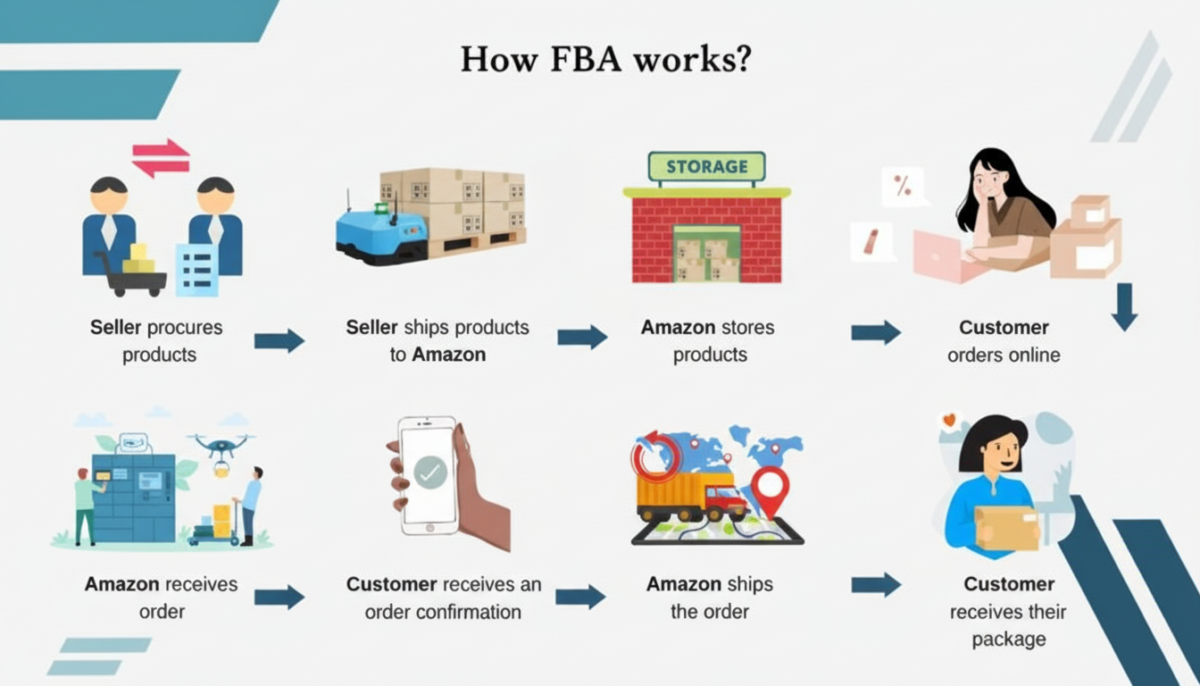
At its core, Amazon FBA (Fulfillment by Amazon) is a service provided by Amazon that allows sellers to store their products in Amazon’s fulfillment centers. Once enrolled in the FBA program, sellers send their inventory to Amazon’s warehouses, where it is stored until purchased. When a customer places an order, Amazon handles the picking, packing, shipping, as well as customer service and returns.
The Benefits of Amazon FBA
Convenience and Simplicity
FBA makes it easy for sellers by managing the logistics and fulfillment aspects of the business. Sellers only need to send their products to Amazon’s fulfillment centers, and Amazon takes care of everything else, letting sellers focus on business growth rather than day-to-day fulfillment operations.
Global Reach
With Amazon’s extensive network of fulfillment centers worldwide, FBA helps sellers reach customers across the globe, greatly expanding their market reach. Sellers can store their products in Amazon warehouses across multiple countries and offer international shipping and access to Amazon’s global marketplaces, enabling them to grow their customer base beyond local markets.
Scalability & Flexibility
FBA provides sellers with flexible storage and fulfillment solutions. Sellers can adjust inventory levels as needed without worrying about storage space or fulfillment logistics. It’s suitable for businesses of all sizes, from small startups to large enterprises, supporting their growth over time.
Prime Shipping Advantages
Using FBA allows sellers to offer Prime shipping benefits to customers, which can significantly boost sales and enhance customer satisfaction. Products fulfilled by FBA are eligible for Amazon Prime, meaning they qualify for free two-day shipping for Prime members. This not only increases customer satisfaction but also improves product visibility and competitiveness in Amazon’s marketplace.
The Drawbacks of Amazon FBA

FBA Fees
Although Amazon FBA offers convenience and a range of benefits, it also comes with various fees for storage, fulfillment, and additional services. These fees can significantly reduce a seller’s profit margins, particularly for products with lower margins.
Limited Control
By using Amazon FBA, sellers give up some control over the fulfillment process. Amazon handles the picking, packing, and shipping of orders, which may sometimes result in errors or delays that are beyond the seller’s control.
Long-Term Storage Fees
Amazon imposes long-term storage fees on inventory that remains in its fulfillment centers for extended periods. Sellers must closely manage their stock levels to avoid these extra charges.
Dependence on Amazon
Relying solely on Amazon FBA for fulfillment can create a dependency on the platform. Any changes in Amazon’s policies, fees, or service terms could potentially affect a seller’s operations and profitability.
FBA vs. MFN
Amazon FBA (Fulfillment by Amazon) and MFN (Merchant Fulfillment Network) are two fulfillment options available to sellers. With FBA, sellers send their products to Amazon’s fulfillment centers, and Amazon handles the entire fulfillment process, including Prime shipping benefits, though it comes with fees. In contrast, MFN allows sellers to fulfill orders independently through their own warehouses or third-party logistics providers.
Should You Use Amazon FBA?
Deciding whether to use Amazon FBA depends on several factors specific to each seller’s business model, goals, and available resources. For sellers looking for convenience, scalability, and access to Prime shipping benefits, Amazon FBA is a strong option. However, sellers should carefully assess their needs, considering factors like costs, control, and growth potential, before making a decision.

How Much Does It Cost to Sell on Amazon FBA?
While Amazon FBA provides convenience and scalability for sellers, it also comes with certain costs that need to be considered when determining if it’s the right choice for your business.
Fulfillment Fees
These fees cover the costs associated with picking, packing, and shipping orders to customers. Fulfillment fees depend on the product’s size, weight, and the shipping distance, and vary based on whether the item is standard-size or oversized, as well as whether it qualifies for Amazon Prime shipping benefits.
Storage Fees
Amazon charges storage fees for keeping inventory in its fulfillment centers. These fees are based on the amount of space the inventory occupies and the duration it remains in storage. Storage costs tend to be higher during peak seasons and for products that stay in storage for long periods.
Additional Fees
In addition to fulfillment and storage fees, Amazon may impose extra charges for services like labeling, packaging, returns processing, and inventory removal. Sellers should carefully review these additional costs and factor them into their overall expense calculations.
How to Get Started?
Getting started with Amazon FBA is straightforward. Here’s how to begin:
Amazon FBA is an invaluable tool for sellers looking to grow their businesses. With its ease of use, scalability, and multiple benefits, it’s easy to see why so many sellers prefer it. If you’re aiming to take your e-commerce business to the next level, Amazon FBA is definitely worth exploring.
Schedule a free consultation with us at eStoreScout today, and let us help you navigate the process. Together, we can maximize your potential on Amazon’s platform and achieve your business goals.
Also, discover the power of Amazon PPC for FBA sellers. Dive into effective strategies and techniques that can elevate your sales and maximize your ROI on Amazon’s platform.